


It is way too easy to take for granted the parks of Tudor City.
They are so beautiful, so well-maintained, and open to everyone. They anchor everything that makes this neighborhood unique and wonderful. But besides the incredible amount of effort that goes into the upkeep (Thank you, Steve!), the reason the parks are here is because there were people who took an active role to save them from development.
These were the people who stood up and said “Absolutely Not” when there was a threat of development from Harry Helmsley. They fought for our parks and their efforts are why we can all enjoy them. Each person who defended our public spaces created the model of stewardship that we should all aspire to today.
There is a current Tudor City resident who was there, a person who can tell the whole story about how the parks were saved. That would be Mark J. Harris. I was lucky enough to sit down and speak with him and his wife Cindy at the Tudor Cafe. This interview has been slightly edited for clarity.
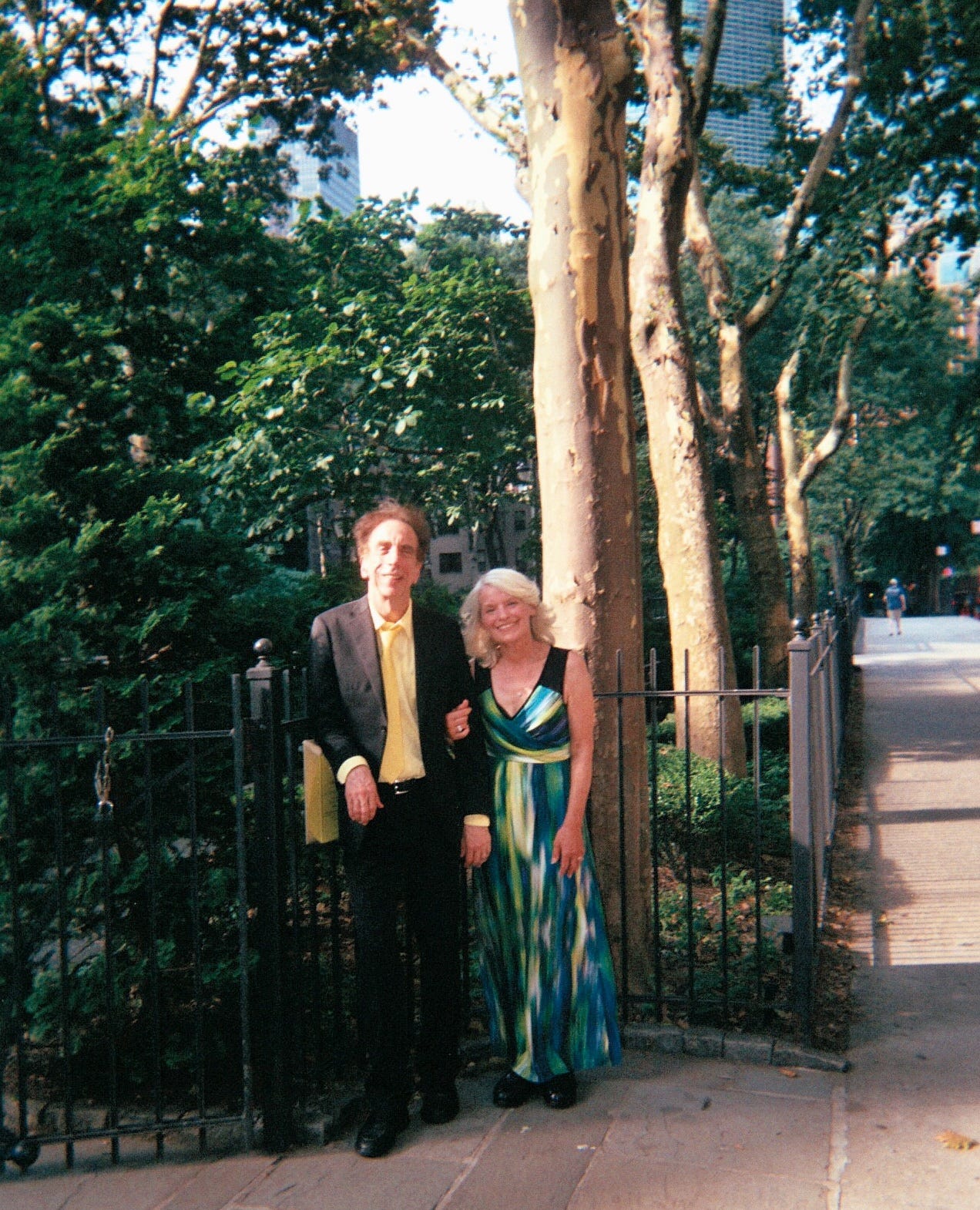
TCV: I am so grateful that you can speak with me today. First things first, who are you? And how long have you lived in Tudor City?
Mark: Well, I am Mark Jay Harris and I’ve been here almost 50 years, or 49 years. I came in 1977 and I pretty much fell in love with the place. My father found an ad in a paper in the Times when someone was trying to sublet one of their apartments in Woodstock Tower. That’s the first place I saw.
I think the only reason this general area took my interest was because when my grandparents were in their 80s they had an apartment on 35th and Third and I said, “This area is somewhat near where my grandparents were.” I didn’t know the city that well yet.
TCV: What did you think of it when you moved here?
The first thing that struck me at first was these apartments were very small. I had come from St. Louis where I was in law school and previously I was in Ohio at Kent State for my undergraduate, and in those other places the apartments were five times as big. There was only a studio apartment for the same price. So, that was a bit of a shock, and eventually I went for one on the 15th floor of 5 Tudor City Place.
It was a different era, for sure. The people in the neighborhood called you by your name, they were trying to act at that time more like the old-style because we were all technically employees and residents of Greater Tudor City. The whole of Tudor City was all one big organization at the time.
The main rental office was in this building. And the maintenance staff was all coordinated, working from building to building. There was a problem, you know, “Joe, go over to the Manor to fix this and...” I believe that Fred French, who was the builder of Tudor City, had just sold all of Tudor City to Harry Helmsley and his corporation.
TCV: So Fred French sold all of Tudor City, or was it just the park area?
Initially, Helmsley wasn’t interested in the park area except maybe to build on it. But French was selling the whole of Tudor City. So Helmsley bought Tudor City and had already possessed it by the time I had arrived here.
And Helmsley’s plan was to get Tudor City to continue as one entity but build two skyscrapers, one on each of the parks. And they were going to be residential, from what I recall at the time, and they were going to be huge, I think about sixty stories.
TCV: Well, so let me ask you about the parks and Helmsley. When it was announced that Helmsley wanted to develop the parks, did the community fully come together to say, “We don’t want this to happen”?
I didn’t hear people say when I moved here that, “Oh, they’re planning to build on the parks.” I don’t remember anyone saying, you know, “You’re moving in and those parks are going to be gone.” I remember that happened after I was already here.
But then all of a sudden, you heard, it just got in the news, that Helmsley was going to build on these parks. But he must have kept it close to his vest when he bought the whole thing. Maybe not, who knows? But whatever it is, all of a sudden now, his plan was along the lines of “Okay, I want to build. I’m the owner and I want to build.” He didn’t call them parks, he referred to them as “plots of land.”
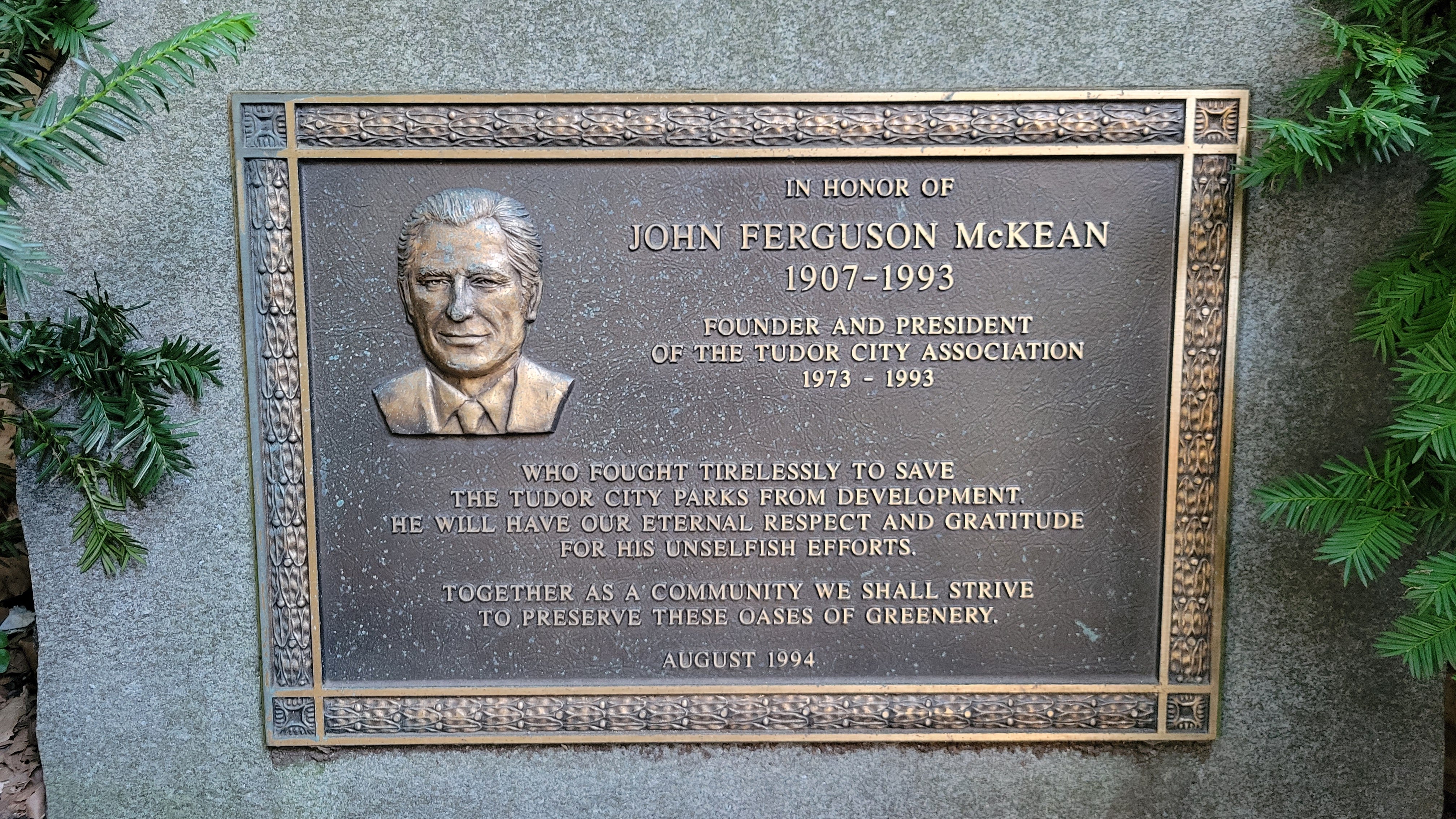
And that’s what set off the community. But the leader of the pushback was John McKean. He is the person who led the community effort to stop it. I mean, I was just a 25-year-old law student.
TCV: So what year was this happening?
Uh, so I’m thinking it was ‘79 or ‘80. The news came out that Helmsley was trying to do that, going to build on the parks. John McKean started leading, doing an investigation on how to stop it. And he tried to elicit people and support by donations or whatever, and he did most of the legal research himself.
Coincidentally, I got my first job down at the City Planning Commission and was in the law office in the City Planning Commission. I was doing zoning cases, writing legislation, zoning, and doing hearings.There were hearings. What John did was go down there every day going through the books. He did a lot of the legwork just trying to find out some way to counter this plan sale.
Helmsley, I remember, I heard him on the radio: “These aren’t parks, these are lots of land, these are just plots of land!” He was incensed that people should try and take the parks because he looked at it as they were trying to take something from him, right?
So John led the resistance effort and we signed up, with petitions and so forth to try and stop it. There were not that many people initially, now that I think about it. People were generally against it but there was a core group of people who fought.
At the time, I still looked at myself as sort of like a college kid, so I wasn’t feeling that I was going to take this over. I had been at Kent State in college with all the problems during those days and knew about demonstrations. This was more a concerted effort by a group of us. I did my own little part. I was with... I knew, this shouldn’t happen and whatever little bit I could do for support I wanted to do. But John gets the credit, he did the legwork. He was probably in his 60s at the time, I’m guessing, or something of that sort.
TCV: What did your efforts look like once you were formed up with John?
The efforts that we made didn’t seem to work. In the beginning, it seemed like David and Goliath, and Helmsley seemed very confident.That’s my recollection. You’d hear the news reports, you didn’t get a feeling like, “How’s this going to work? How are we going to stop them?”
And since Tudor City was one whole unit, you could see his point of view that “I bought the whole land from Fred French.” Fred French didn’t chime in, but my guess is he probably didn’t like the idea, but who knows? I think it would have spoiled his original concept had those buildings gone up.
You have to remember that at the time, even though we were a resident of this building, you had rights as a resident of Tudor City. So if there was something going on in the Cloisters, or one of the bigger buildings like 45, you could go there. You could go sunbathing on the roofdeck, right around the sign. I’m not a sunbather, but went up a number of times just for the heck of it to uh, you know, take in the view and enjoy it. If you’re a resident of Tudor City, you could just walk into any other building.
TCV: That’s very different from now.
Everyone in the neighborhood had equal rights to all the buildings. And the reason I mention this is that that was the idea, the legal concept, that eventually undermined Helmsley. John McKean and others found a way to undermine the theory that he could do whatever he wanted with the parks. Helmsley was violating our rights by taking away the park under my lease at the time. Let’s say I have a lease from 1980 then to 1982 to live in a Tudor City apartment and have all the rights to the area. They were violating the agreement by taking away this park. So, obviously, multiply that by the number of people who lived here. When you’re a resident of Tudor City, your lease gives you these rights, these privileges to go to the other buildings and the parks.
John McKean proposed to the judge in the legal proceedings to stop it because Harry Helmsley is intending to deny the residents of Tudor City access to their parks that were included on their leases.
TCV: Incredible.
Basically, John McKean was doing the majority of the hard, day-to-day work to get this done, and he might give credit to one or two others, and they came forth with that legal theory and that was put, and they put an injunction on Helmsley’s plans to build on the parks based on that. I am leaving out a lot of the legal stuff that went back and forth
TCV: So what happened on Memorial Day in 1980?
We were working on a specific injunction to cease and desist, laid on Helmsley. But right before the Memorial Day weekend, when everyone was away, was he sending in the bulldozer. I guess his strategy was, ‘I’ll make it a fait accompli. I’ll show them it is just a plot of land.’ He was insistent about calling the area a plot of land instead of parks and then he would dig it up and then you’ll see it’s just a plot of land, no more trees, no grass.
Even though the judge said “I can’t do anything.“ Helmsley assumes even the residents will be away on the weekend, no one will know, So, all of a sudden on that Memorial Day weekend, John McKean gets on the bullhorn one night, and he starts over by The Manor because Helmsley’s bulldozers went for the North Park.
John lived in The Manor and he must have heard it starting up. The next thing you know, he was on the bullhorn. He was going up and down Tudor City Place screaming “COME DOWN! COME DOWN!” So people came running back.
John McKean, wow. I remember him even saying to people at the time: “Listen, you can’t count on everyone in this, but in the end, all it’ll take is a few people doing all the hard work. You can’t be discouraged that other people don’t have the fight for this, we just have to keep going to stop this.”
But the people came down. They stopped the bulldozer. Then we had the idea of staying in the park over the long weekend to prevent the bulldozers from starting up. We slept in the park. I was in my sleeping bag so they wouldn’t come back with the bulldozers. And I remember the exact spot where I slept in the North Park; it was over by the shed that Tudor City Greens keep there now.
And the next night, maybe two, we slept there. After that, they put up a picket fence to try and stop us. Before that, the fence on it, there was no metal fence left. And before that, there was a ranch-type fence. If you see old western movies or something, you see there’s a post, another post, and then a horizontal bar from one post to the next. So that’s what it was around Tudor City with the parks when I came here.
But after Helmsley put up these boards on a picket fence and then we all took to writing, doing drawings on the fence. The Empire Strikes Back was the movie in the movie theaters at the time. So I took that and drew Luke Parkwalker fighting off Darth Helmsley.
TCV: [Laughter] I love that.
I also put a sign on another place on the fence with a: “Give me a tree, give me a bush, give old Harry a kick in the t*sh!”
That one I drew got in one of the local papers. Someone took a photo of it and so it was a lot of fun. We were decorating this fence with all this stuff. I remember it was even fun walking around, seeing people come by and reading. It was like seeing your artwork read. You know, someone, “Oh, look at this!” and they’d laugh, and I’d say, “Oh, that’s good, I’m glad they’re enjoying my work.” Comedic and poignant, you know, was the point. And then it was left like that for a while while Helmsley continued the fight. The fight went on.
TCV: So when did those parks become landmarked? Was that later that year?
I’m thinking that the back and forth lasted over the summer. They stopped the bulldozer, and then this went on for several days that week. Then when the courts lifted the ban, the workers continued to build the wall. The Tudor City Association, which was basically John McKean, took politics out onto the street and picketed Helmsley’s office and home.
And finally, Helmsley realized he was losing the public relations battle and backed down and agreed to remove the wall on Tuesday, June 3rd. Then an injunction was obtained to halt the destruction, and he finally accepted. He finally accepted defeat a few years later.
Then they formed the Tudor City Greens. It came out of that. They were creating a new legal entity that was going to allow the parks to continue, but the condition was that they would have to be made available to the public. Unlike Gramercy Park.
So Helmsley finally caves in and says, “All right.” He didn’t agree with the theory, obviously, but he just said, like, a public relations thing, “This is too much legal”. So he sold the whole thing to the people who turned it into co-ops. He probably went to his grave thinking, “I got done in by the residents of Tudor City.”
It’s a David versus Goliath story that was won without violence or anything, but by sheer, hard work by residents and particularly John McKean. To me, these parks are a treasure, and Tudor City is a treasure, and those parks wouldn’t be here if it wasn’t for him.
TCV: What do you think the lesson was? What’s the legacy of this struggle to you personally?
I would say as far as keeping the preservation of the park, the lesson is never underestimate what one person or a small group of people’s efforts can lead to, even when the odds are against them.
The first thing is that if you believe in something and it’s right, and you have the willpower and the energy to put yourself out, there’s always a chance. Even when the odds are against you. Saving the parks probably looked hopeless and we were up against an empire and we were just residents. But this was our home.
The second thing is that the space should be valued and appreciated and promoted wherever and whenever it can be, without infringing on other people’s rights. Including the owners of property to the extent that they’re denied their rights. But on the other hand, there are certain rights in keeping open air and parkland and physical natural areas within an urban area, and they have to be balanced with each other.
So those parks are here. What Fred French envisioned turned out to be a beautiful thing, and he encouraged this type of living in the city in an urban area. And it morphed and gradually changed over the years and adapted to different conditions, but it’s been preserved, even after he sold it to a developer. It’s been carried on by generations after, by people who lived here after. I assume there are a lot of people who have no idea how it started or where it came from but will learn devotion to our neighborhood. The idea of having the little parks, I think that unifies the Tudor City community itself, in itself.
And third, that’s a lesson too… that where something’s worthwhile and it can be preserved for generations if people put in the time and effort and devotion to values, the common community values that allow everyone to appreciate living together.
TCV: Well, thank you for everything you did. Thank you for fighting for what we have, because it’s beautiful. The parks really are everything and provide a wonderful, connective, and open space for Tudor City.
That’s nice to hear. And, actually, the last thing to note is that Tudor City used to have more light. Discouraged buildings around us reduce the light to the parks. Whatever goes us around us, you have to calculate the angles of the shadows from any new building. Because that can kill the park from outside the neighborhood. You don’t want to get rid of its light. There’s all sorts of ways to be vigilant about our parks. As we have to be vigilant to preserve our country, we have to be vigilant to preserve our neighborhood for future generations.
TCV: Incredibly well said and thank you so much, Mark.
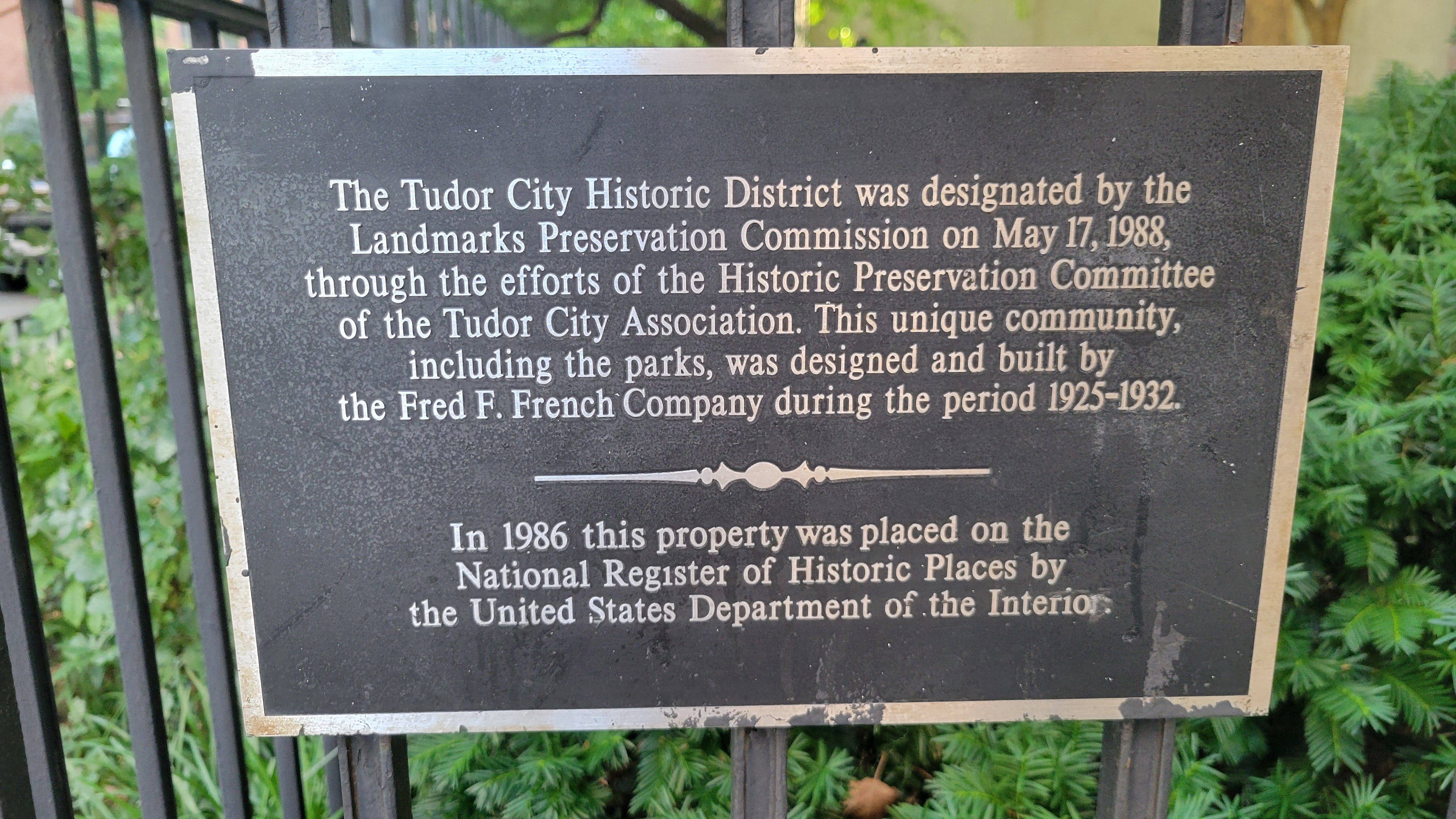
As a friend of mine likes to say, we are but stewards of this neighborhood. What we enjoy now is because of the efforts of past residents like Mark. We should pay it forward, and being aware of and getting involved with groups like the Tudor City Association and the Tudor City Greens is the best way to do that.
What we do now honors the last hundred years of our history and supports the next hundred years.
-TCV